February 15, 2026
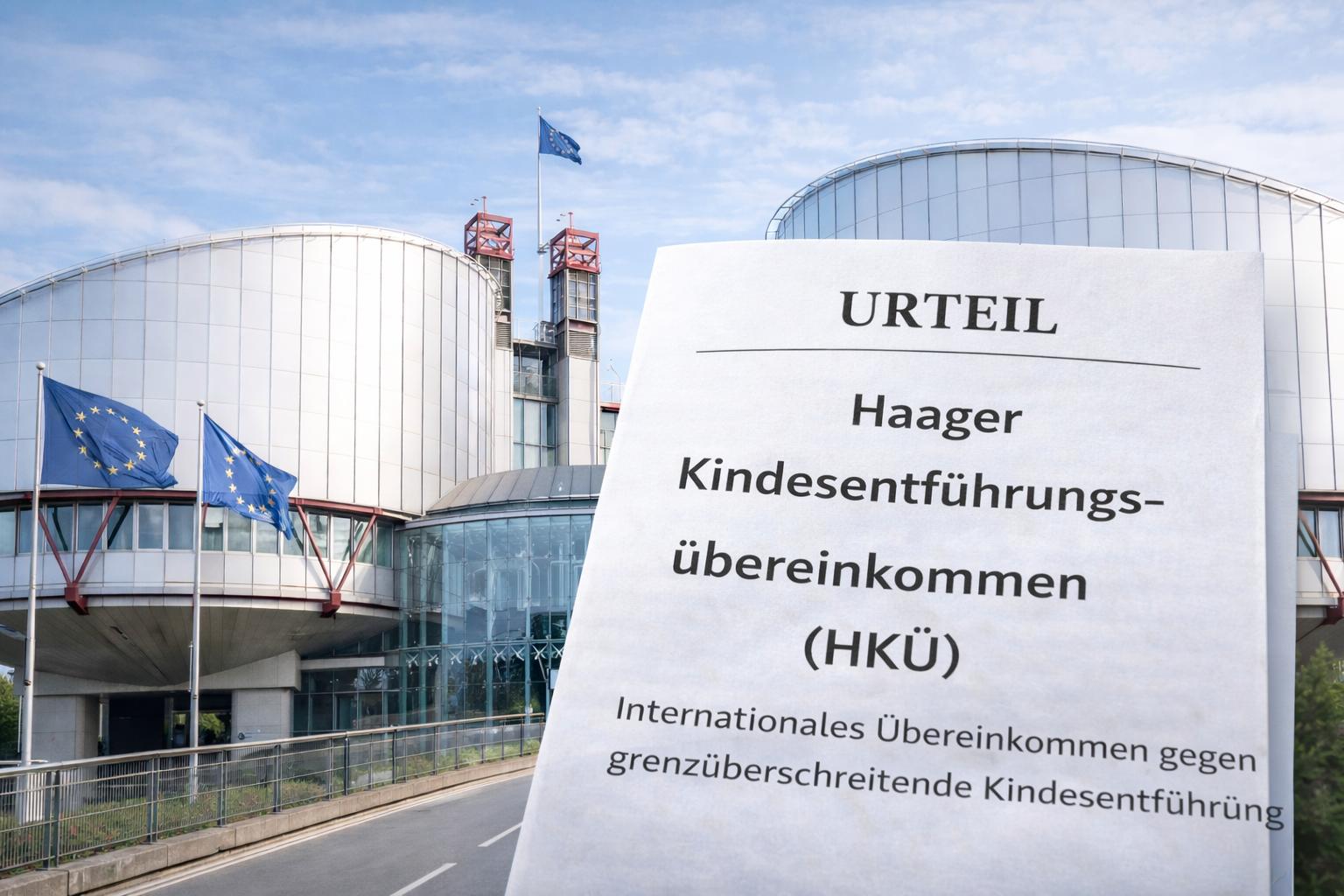
A Greek mother traveled from Florida to Rhodes in October 2020 with her father's consent with their children (then four and six years old). The agreed return date was not met — initially due to COVID reasons. In 2021, the father applied for the repatriation of the children after Hague Convention on the Civil Aspects of International Child Abduction (HKÜ).
The court of first instance in Rhodes refused repatriation and said yes to a serious risk for the children. The Court of Appeal and the Greek Court of Cassation, on the other hand, ordered repatriation — without examining whether the children should be heard. The children were actually transferred to their father in the USA in December 2024.
The ECHR provided a Violation of Art. 8 ECHR (Right to family life) and awarded the complainants 7,500€ in damages and 4,200€ reimbursement of costs.
The reasons for the decision are twofold: On the one hand, the Greek courts had not exhausted all available means to clarify the existence of a serious risk under Art. 13 lit. b HKÜ. On the other hand — and this is the actual new statement of the judgment — the Court stated expressly in paragraph 101:
“The Court is of the opinion that it is now time to establish that national authorities are required to consider the advisability of hearing the child directly or otherwise and, where appropriate, to rule this out by means of a reasoned decision.”
The courts would therefore have — regardless of a request from the parties — must check ex officio whether and in which child-friendly form a hearing would have made sense. Since this never happened and was never substantiated over two and a half years and three instances, the ECHR saw Article 8 ECHR infringed.
Two judges have the decision contradicted. They doubt that failure to review the hearing alone can bear the breach of the Convention if the mother had not substantiated the reason for expulsion under Art. 13 lit. b HKÜ and had not filed a request for a hearing herself. The controversy shows that the verdict is not without controversy — but it is described as Guiding decision persist in return proceedings for the child's hearing.
that HKUE is an international state treaty to which over 100 states belong today. His aim is to prevent a child from being illegally removed or withheld restore as quickly as possible — and to prevent the abducting parent from creating fait accompli over time.
A illegal spending exists when a child is brought to or withheld in another Contracting State and the custody of the other parent under the law of the previous State of residence is violated as a result. If this is the case, there is in principle a claim to immediate repatriation — without a substantive assessment of the child's best interests, which is reserved for the courts in the child's habitual place of residence.
However, the HKÜ finally sees regulated Exemptions before, which are to be interpreted strictly restrictively in accordance with established BGH and ECHR case law:
In addition to repatriation proceedings, the abducting parent is threatened with criminal prosecution Section 235 StGB (deprivation of minors). Anyone who takes a child abroad or withholds it there in order to remove it from the custody of the other parent risks a Imprisonment of up to five years. If there is a risk to the child's physical or emotional development, the penalty is increased to up to ten years. Civil repatriation proceedings and prosecutions run independently of each other — but can in fact create considerable pressure.
The ECHR ruling has no direct binding effect on German courts, but shapes the interpretation of Article 8 ECHR and will be observed by higher regional courts. Already after Section 159 FamFG It is generally mandatory to personally interview the child in matters relating to children. The ruling now tightens the requirements for the reasons if this is not the case: According to the ECHR standard, a general reference to the low age will no longer be sufficient in future.
In practice, this requires action on both sides of the process.
If your child has been unlawfully taken abroad Time is running against you — Each month's passage of time reinforces the (illegal) stay abroad. Seek legal assistance as soon as possible. The procedural dynamics of an HKÜ process are complex and the deadlines are short.


